
The Hamilton Beach Personal Blender 51191G in Light Purple and 51192G in Ice Blue are two colors of a corded, one-cup Blend & Go setup. Each uses a 14-ounce sealed jar that becomes the drinking cup and a single press-and-hold Pulse control. This is a small cold-drink appliance, not a cordless bottle blender or a family-size pitcher system.
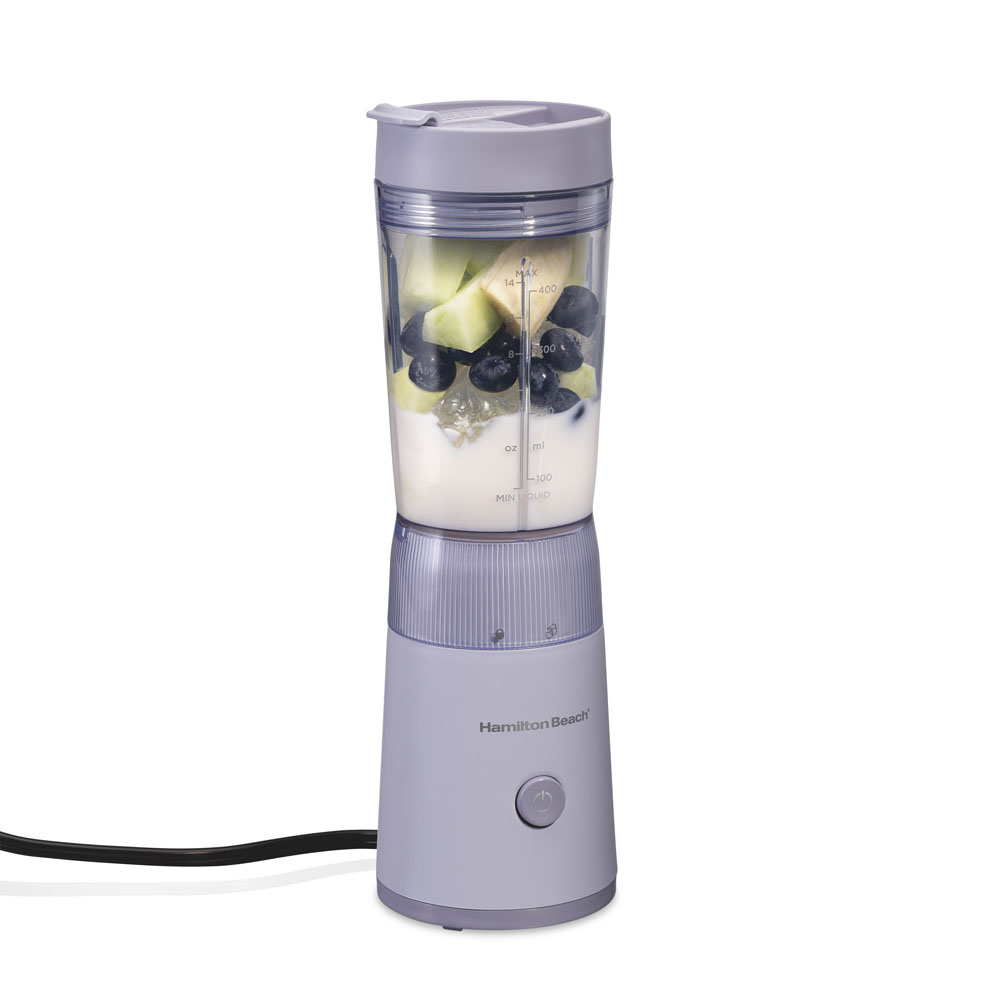
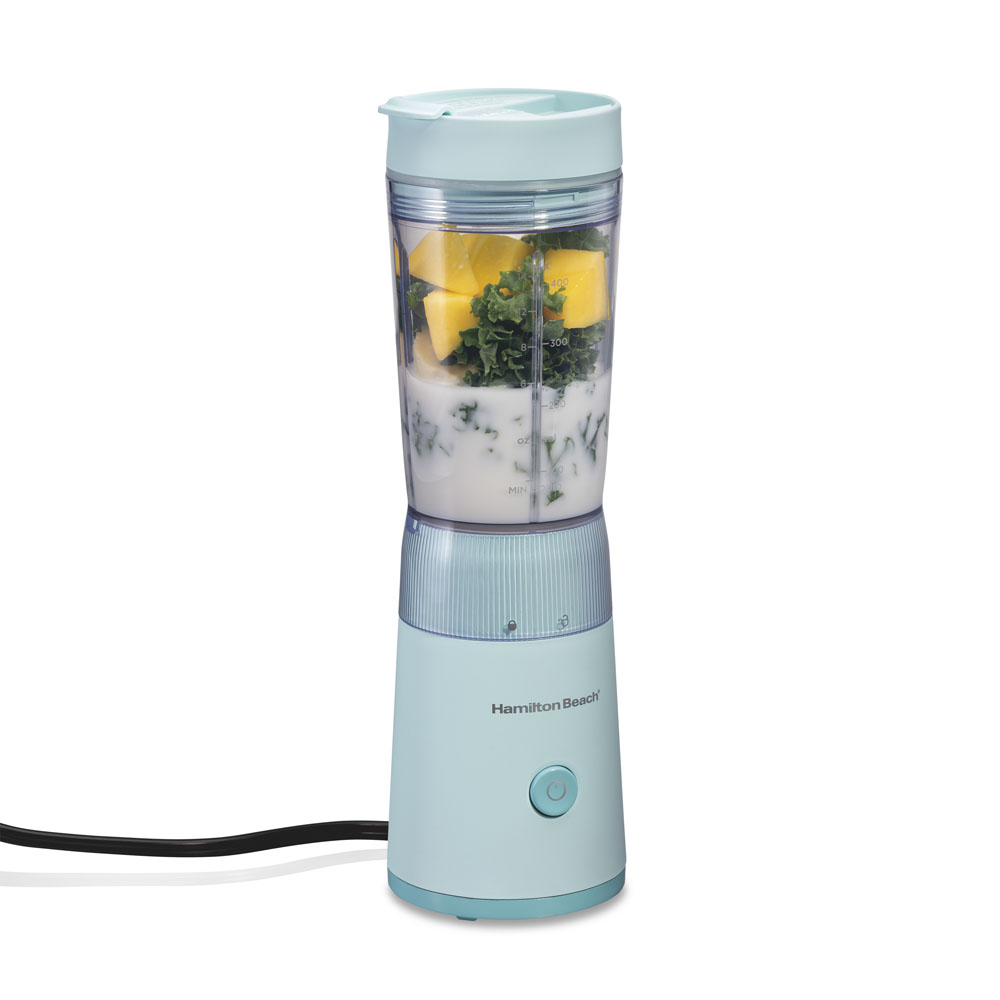
One small jar handles both blending and drinking
There is no pitcher to pour from and no second cup listed: screw the blade lid onto the jar, blend it on the base, then remove the jar and use the separate leak-proof travel lid for sipping. That shortens the transfer-and-wash routine for one person. It also fixes the useful scale. The listed capacity is 14 ounces, so it suits a modest shake or smoothie, not a shared breakfast batch. The number is nominal vessel capacity, not a confirmed safe fill line; do not assume a full 14 ounces of ingredients will always be a sensible finished portion.
The word “portable” in the page description is easy to misread. Hamilton Beach calls the blending “corded,” and the product image shows an electrical cord. You need an outlet to blend; the sealed cup travels only after the motor base is left behind. If you need to blend away from a wall plug, look for a clearly rechargeable personal blender instead. If you want a family pitcher, more capacity, or separate vessels for several people, move up to a countertop package rather than stretching this one-cup design.
Follow the simple pulse routine—and keep it cold
The page advertises 300 watts of peak power and stainless-steel blades, while the controls are deliberately uncomplicated: there is a Pulse button, not a speed dial or named automatic program. The linked Use & Care sheet says to add liquid first—at least one-half cup or enough to cover the blades—then add the remaining ingredients and place ice or frozen ingredients last. Secure the lid, seat and lock the jar on the base, then press and hold Pulse or use short pulses until the drink reaches the consistency you want. It is a hands-on routine, so you decide when to stop; the peak-watt label is not a continuous motor rating or a measured guarantee of smoothness with any recipe.
The same guide is unusually clear about limits: do not blend hot food or liquids, and do not chop or process hard items such as cheese, crackers or meat. If the mixture stalls or clings to the wall, release the button, unplug, open the jar and move ingredients toward the blades with a spatula; do not put a utensil into a running blender. Frozen ingredients are added last, but that instruction does not establish an ice-only crushing mode. Dry grinding, numeric maximum fill and a safe hot-liquid amount are not confirmed, so an essential need for any of those should steer you to a better-documented model.
Cleanup is compact, but mind the blade assembly
The manufacturer product page says the jar, blades and travel lid are dishwasher-safe, and the linked sheet directly confirms that the jar and lid may go on the top rack. It warns against the dishwasher’s Sanitize setting. The base, cord and plug must not be immersed. For a quick rinse, the manual describes adding one cup of warm water and a drop of dish soap, then holding Pulse for 30 seconds; unplug, rinse and dry afterward. That is a convenient in-place rinse, not permission to skip normal cleaning or to leave food stored in the jar. The cutting edge is sharp, so handle it carefully and follow the supplied sheet for disassembly and washing rather than assuming the blade is a separate everyday part.
The details that change the choice
Both U.S. product pages list a three-year limited warranty and motor-overload protection. If the motor stops from overheating, the linked guide says to unplug the appliance and let it cool for about 15 minutes before trying again. The detail block lists 12 inches high by 3.8 wide by 3.6 deep, but the image alt text says 3.5 by 3.5 for width and depth. Treat the footprint as approximate.
The guide’s rating-label example identifies 51190F rather than these SKUs, although it allows suffix letters. Both exact color pages link that sheet; still, the label is not an exact printed crosswalk to 51191G/51192G, so confirm your unit’s label for replacement parts. The pages describe the same cup, corded pulse routine and peak-watt claim. The confirmed difference here is Light Purple versus Ice Blue.
Who should choose it?
Keep this pair in view if you mostly make one cold drink at a time, like blending and sipping from the same sealed jar, and are comfortable holding a button while it runs. The 51191G and 51192G have the same practical strengths: modest single-serve portions, a travel lid, one simple pulse control and a small base. Choose between them by the finish you want, not by a performance distinction the manufacturer does not claim.
Choose another format if you need variable speed, unattended programs, a jar large enough for several servings, cordless blending, hot soup, a dedicated ice-only cycle or an approved hard-food grinding routine. A nearby personal blender may look similar but can ship with a different cup count, lid or motor arrangement; check the exact code and in-box list. For this pair, the useful question is whether a single 14-ounce cold drink solves your ordinary task without turning a compact convenience appliance into a substitute for a larger blender.
Primary sources: Hamilton Beach 51191G product page, 51192G product page, and the Use & Care guide linked by both pages.

