
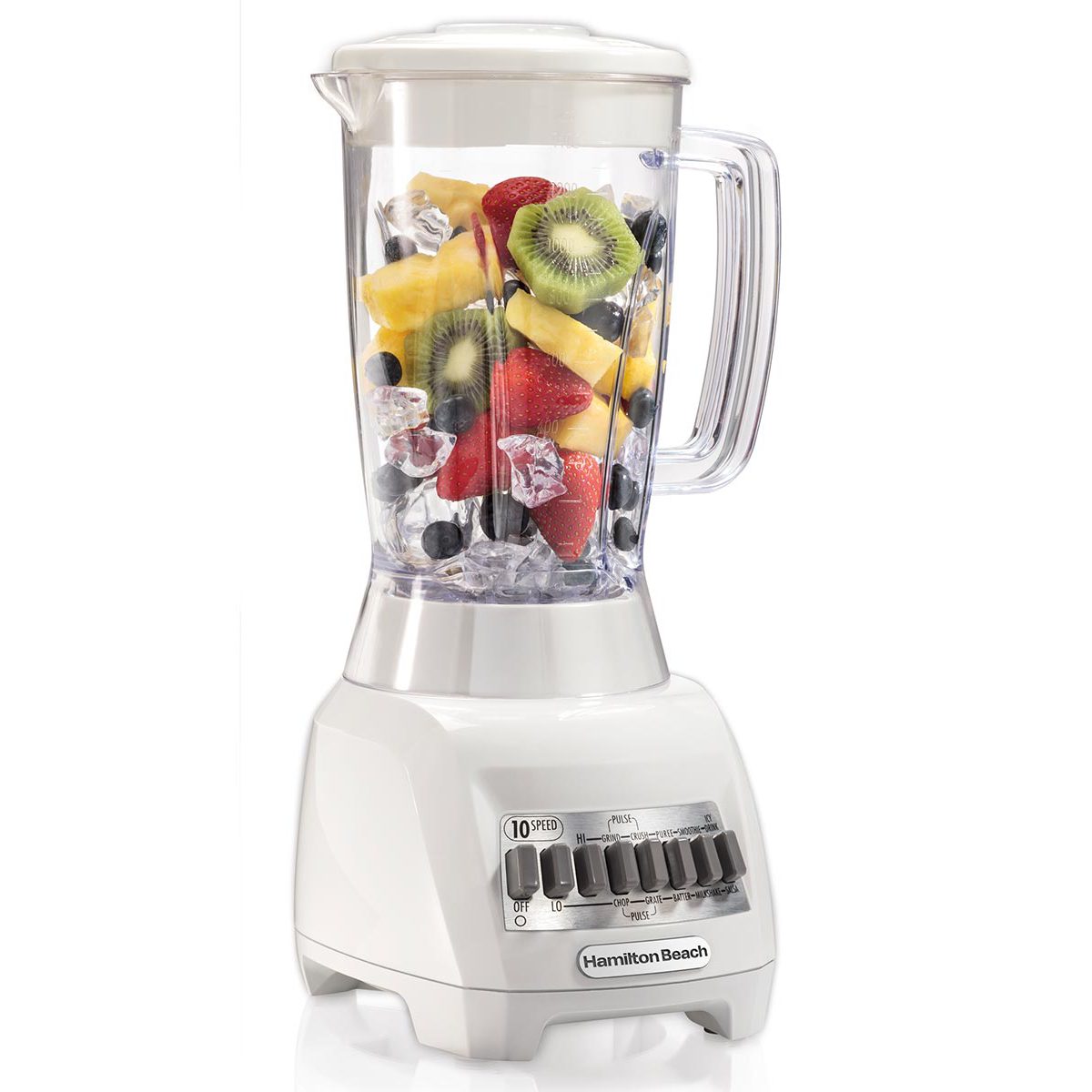
Hamilton Beach’s 50123, 50126, 50128 and 50129 are four exact U.S. model numbers for a straightforward 48-ounce, ten-speed pitcher-blender configuration. The 50126 page identifies white, 50129 red, and the 50123 and 50128 maker images show dark bases; each number remains distinct for manuals and replacement parts. Their pages describe the same 500-watt-peak class, stainless-steel blades and dishwasher-safe pitcher, and each is marked “No Longer Available.” Treat them as earlier-model references and check the exact label, jar and condition before buying.
A 48-ounce pitcher, not a travel blender
Each exact page describes a basic corded blender base and a nominal 48-ounce pitcher. The 50126, 50128 and 50129 pages call the included jar plastic; the 50123 page’s parts list also names a replacement “Jar, Plastic 48oz.” The maker identifies food-contact areas as BPA-free, which does not identify the resin. There is no personal cup, second pitcher or separate processor bowl listed for these configurations. A travel-cup routine points toward a Blend & Go design; a 56-ounce pitcher is a different package to compare.
The scale here is middle-of-the-road for a countertop pitcher. A 48-ounce vessel can be a reasonable match for a couple of drinks or a modest household batch, but it misses a strict 64-ounce family-size minimum. The maker lists dimensions close to 14.6 inches high by about 7.9 inches wide and 6.3 inches deep; the white page prints 14.68 inches of height and the red page 14.6. That slight listing difference is not a useful performance distinction, but it is worth checking counter clearance if a shelf is close.
Ten selectable speeds mean hands-on control
The 50123 product page explicitly says ten speeds; the 50126, 50128 and 50129 pages describe ten blending functions and title the units as ten-speed blenders. Their exact maker images show similar physical push-button controls, including low/high selection and Pulse. The linked 840243701 manual describes selecting low or high, then a speed, and says Pulse runs only while held. This is hands-on control rather than a timed smoothie or soup preset. The maker’s 500-watt figure is a peak-power claim, not a measured blending score or continuous-input rating. Ten choices do not guarantee smooth frozen results.
The booklet’s cover title highlights 50123, but the model table on its final page expressly lists 50123, 50126, 50128 and 50129 together as type B61. That table gives 120 V, 60 Hz and 3.2 A; check the actual appliance rating label before relying on any used unit. The shared manual also documents a cautious hot-liquid procedure: do not fill beyond three cups (24 ounces), vent the two-piece lid, start at low speed and hold the lid with an oven mitt or thick towel. This is a limited safe-use instruction, not permission to fill the full 48-ounce pitcher with hot liquid.
What the page does and does not establish
For ordinary drinks, shakes and icy beverages, the product pages give the clearest use case. They identify the pitcher as dishwasher-safe and the base as counter-stable. The linked manual recommends at least a cup of liquid per recipe for best blending and cautions against uses such as stiff dough and raw-meat grinding. It does not establish a cold maximum fill line, a separate ice-only allowance, a noise rating, a dedicated cleaning cycle or an independent performance test. Plan hot batches around the manual’s three-cup limit, not the pitcher’s nominal 48-ounce capacity; low-liquid mixtures may also need more liquid to move properly.
The four archived manufacturer listings mark these SKUs “No Longer Available” and list a three-year warranty (the 50123 page calls it limited). That is a historical maker listing, not a claim that a used unit retains coverage or that a seller has stock. The peak-watt label says nothing by itself about longevity or blending speed. Anyone considering one now should inspect the base, controls, lid, pitcher and cutting assembly, and confirm the exact model number against replacement parts and its guide.
Choose the finish only after the package matches
Choose among 50123, 50126, 50128 and 50129 only after confirming the full number on the base and pitcher. The documented operating profile is consistent across the four pages, while model identity remains important for replacement jars and lids. The 50126 page lists white, 50129 red, and the 50123/50128 page-linked images show dark bases; finish is a visual distinction, not a reason to select a different blending plan. The maker’s pages list a 48-ounce plastic replacement jar and filler cap, but do not assume a loose jar fits every Hamilton Beach base. If you need a larger pitcher, compare that separate model by its own exact jar and manual rather than by peak-watt claims alone.
In short, these four SKUs suit someone prioritizing a simple full-size pitcher, manual speed selection and a dishwasher-safe jar. They are a poor fit when you need a personal drinking cup, a 64-ounce vessel, hot batches above the manual’s three-cup limit or current manufacturer stock. Search by the exact model number, then verify the actual box, rating label and condition; do not assume a near-numbered listing is the same product.

